
Toggle bolts for cavities & ceiling suspensions - in M4 to M10
- ✓ Broad load distribution
- ✓ Instantly ready to bear load
- ✓ Easy assembly
If you are faced with the challenge of securing heavy loads to cavity walls, plasterboard or suspended ceilings, toggle bolts are the professional solution. At SMK Meister, we offer you high-quality toggle bolts in sizes M3, M4, M5, M6, M8 and M10, which impress with their intelligent design and reliable load distribution.
Toggle bolts are characterized by their unique tilting mechanism, which enables widespread distribution of pressure on the back of the cavity. This makes them the first choice for demanding mounting tasks in drywall, sanitary installations and the installation of electrical installations. Our toggle bolts meet certified quality standards and are manufactured in our state-of-the-art machinery.
Toggle Bolt Facts
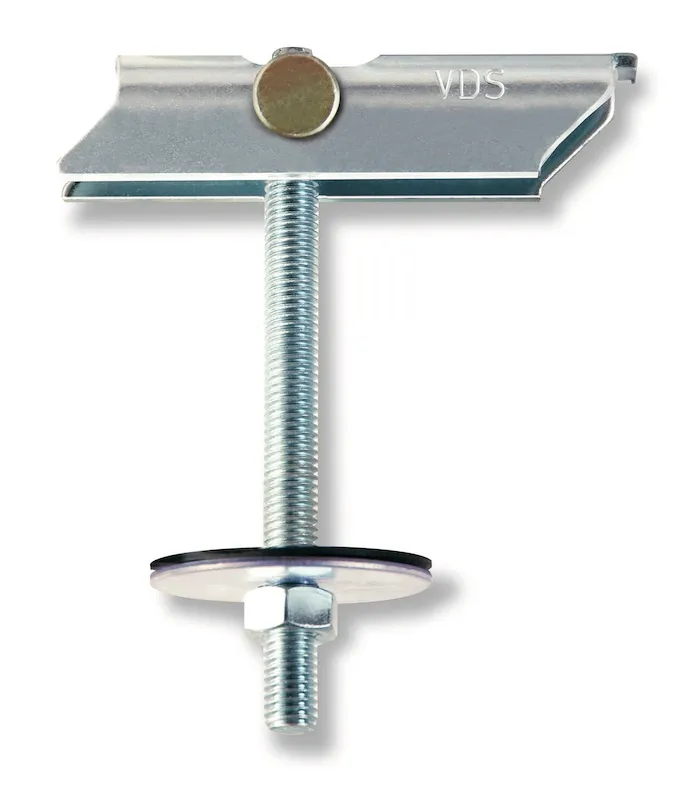
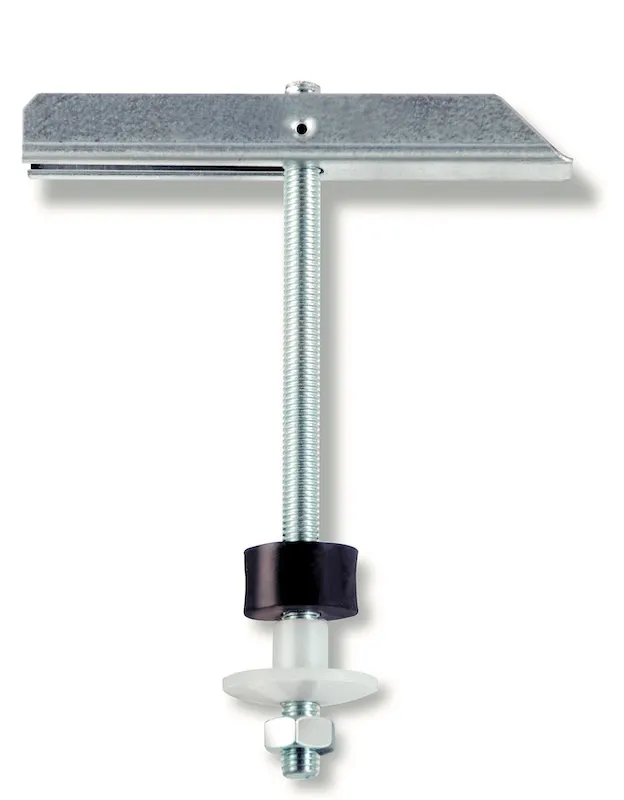
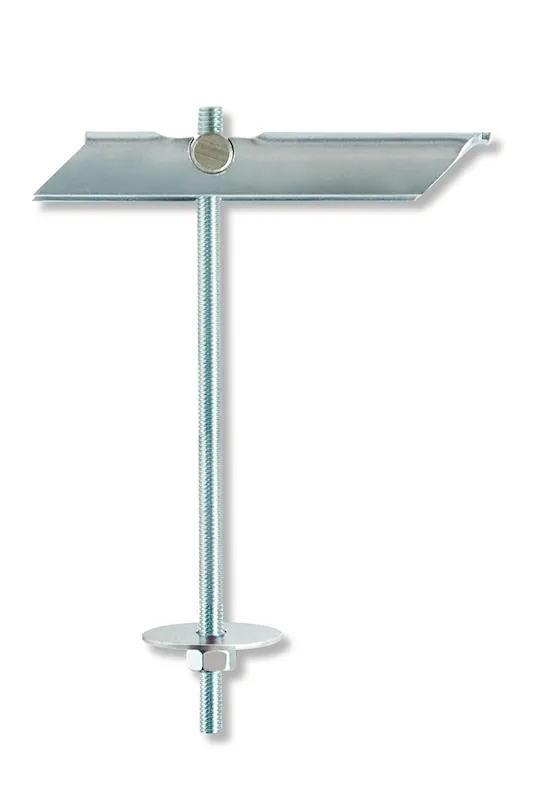
Toggle bolts for cavity mounting - KV8 to KV10 and heavy duty toggle bolts K10 and K10 mini
M4, M5, M6, M8, M10
Galvanised steel, optional stainless steel
gypsum boards, hollow blocks, gypsum fiber boards, chipboard, suspended ceilings
Depending on size 0.3 kN to 13.0 kN (breaking forces)
Depending on the version (see subpages of versions)
- K4 - K8 (to the subpage - find out more here)
- KV8 & KV10 (to the subpage - find out more here)
- K10 & K10 Mini (to the subpage - find out more here)
Benefits of the SMK Meister toggle bolt
Maximum load capacity due to optimal load distribution
The toggle bolt distributes the load over a large area on the back of the cavity wall. This enables significantly higher load capacities than conventional expansion plugs and ensures maximum dimensional accuracy when mounting.
Quick and tool-free installation
At SMK Meister, we rely on user-friendly solutions. The toggle bolt can be installed without special tools - conventional tools are sufficient for safe installation.
Versatile for various cavities
Whether gypsum board, gypsum fiber or chipboard — our toggle bolts are suitable for almost all cavity materials. The various sizes from M3 to M10 cover all areas of application.
Corrosion resistant designs available
For humid rooms or outdoor areas, we offer toggle bolts in stainless steel versions. These ensure long-term safety even under demanding conditions.
Can be loaded immediately after assembly
After screwing in, the toggle bolt can be loaded immediately. You save time and can continue your projects without waiting times — a real advantage on any construction site.
Important information about the toggle bolt
What is a toggle bolt and how does the tilting mechanism work?
A toggle bolt is a cavity attachment that consists of a threaded rod with a foldable metal body. During installation, the toggle bolt is inserted through the pre-drilled hole in the cavity wall. As soon as the metal body reaches the cavity behind the wall, it opens due to gravity and lays flat against the back of the plate. When the screw is tightened, the load is distributed over the large contact surface, which ensures a high load capacity.
When do I use toggle bolts instead of normal expansion plugs?
Toggle bolts are the first choice for cavity fixings, while normal expansion plugs are designed for solid materials such as concrete or solid bricks. Use toggle bolts when you want to attach to plasterboard walls, suspended ceilings, or other cavity materials. Toggle bolts are superior to simple plastic dowels, particularly for heavier loads such as wall cabinets, sanitary facilities or electrical installations.
What is the difference between spring folding dowel and toggle bolt?
While both are suitable for cavities, they differ in construction. Spring folding dowels have two spring-loaded wings that automatically open when plugged through. Toggle bolts, on the other hand, have a metal body that tilts as soon as it reaches the cavity. Spring folding dowels generally require less cavity depth. Toggle bolts often offer higher load capacities in larger versions such as the M8 toggle bolt or M10 toggle bolt. At SMK Meister, we are happy to advise you on which solution is optimal for your project.
What special solutions does SMK offer (e.g. for installation from above)?
With over 50 years of experience in fastening technology, we at SMK Meister can also offer special solutions. Contact us for special requirements such as assembly from top to bottom, special thread lengths or designs in special corrosion resistance classes. Our team of experts will work with you to develop the right solution. We can also find the right mounting solution for use in particularly thick walls or with exceptional load requirements.
Which versions of the toggle bolt are available at SMK Meister?
K4-K8 standard toggle bolt:
Are the universal solution for hollow walls, hollow ceilings and sandwich panels — available from M4 to M8 with breaking load values of up to 13.0 kN.
Read more about the K4-K8 toggle bolt experienced
KV 8 & KV 10 toggle bolt:
Are specially designed for trapezoidal sheet metal ceilings, with VdS and FM approval — ideal for fire protection systems, pipes and ventilation ducts.
Read more about the KV 8 & KV 10 toggle bolt experienced
Heavy duty toggle bolt K10 & K10 Mini:
Impress with a large contact area and 12 kN breaking load for soft building materials and heavy-duty applications. The K10 mini is the compact version for smaller wall thicknesses.
.webp)
Installing the toggle bolt
Preparation/tool requirements
To properly assemble toggle bolts, all you need is a drill with a suitable drill in accordance with the table values and a screwdriver or open-end wrench. Before you start, make sure that there is sufficient cavity depth behind the wall. Check the wall thickness and choose the appropriate dowel size. For example, for the M6 toggle bolt, you need a 17 mm drill and a cavity depth of at least 70 mm.
Carrying out the assembly
First, drill a hole of the specified diameter through the cavity wall. Make sure that the borehole is clean and free of burrs. Now insert the toggle bolt through the drill hole with the expansion mechanism unfolded. As soon as the toggle mechanism reaches the cavity, it opens and lies flat against the back of the plate. The toggle bolt pulls firmly against the wall and is immediately resilient. At SMK Meister, we guarantee a precise fit through maximum dimensional accuracy.
Follow-up/testing
After assembly, you should check the attachment by gently pulling on the structure. The toggle bolt must not twist or loosen. Make sure that the nut or screw head is tight. If necessary, you can still readjust the position as long as the final load has not yet been applied.
What sets us apart
ISO certification
For us, quality is not a promise, but a proven standard. Our ISO certification proves that we consistently comply with the highest quality requirements in all areas of production — from sheet metal processing to fastening technology.
Reliability and punctuality
You can rely on us — not only when it comes to quality, but also when it comes to appointments. For over 50 years, our customers have known that we keep our promises. Timely delivery is not a bonus for us, but a natural part of our service.
Highly flexible corporate structure
As a family-run company, we respond quickly and unbureaucratically to your requirements. Short decision-making processes and an experienced team enable us to reliably implement even short-term orders, special solutions and changing requirements.
Innovations in fastening technology
Our product portfolio in fastening technology is constantly growing — driven by real practical requirements. Whether tilting bolts, heavy-duty folding plugs Big M or Balkonfix: Many of our products were developed in close cooperation with customers and are the result of decades of development work.
Approved and tested products
Our mounting solutions are not only tried and tested, but are also officially approved and tested. This gives you products that you can blindly rely on in safety-relevant applications, such as in construction and façade technology.
Open for individual customer projects
Standard solutions are a good start — but not always the best answer. We take the time to understand your specific requirements and work with you to develop tailor-made solutions in sheet metal and fastening technology.
FAQ - Frequently asked questions about toggle bolts
Can I also mount heavy loads (e.g. boiler, ventilation)?
Yes, for heavy loads, we recommend the M8 toggle bolt or M10 toggle bolt, which reach breaking forces of up to 13 kN. However, it is important that you calculate the safe working load taking into account the safety factor and the surface. For critical applications such as boilers or ventilation systems, multiple toggle bolts should be used to distribute the load.
What thread length do I need for my plate thickness?
The required thread length depends on the plate thickness and the desired free thread length. As a rule of thumb, thread length = plate thickness + desired free length + reserve length for nut and washer. SMK Meister offers standard lengths, and we can also produce special thread lengths on request.
Can I remove the toggle bolt again?
Yes, toggle bolts can be removed by completely unscrewing the threaded rod. The toggle mechanism then falls into the cavity. This is an advantage over many other mounting systems and makes toggle bolts a flexible solution.
Do I need special tools for installation?
No, you do not need any special tools to install toggle bolts. A standard drill and a suitable screwdriver or open-end wrench are sufficient. This makes installation particularly economical and uncomplicated.
Are special lengths available for extremely thick walls?
Yes, at SMK Meister, we also offer custom-made products. Thanks to our ultra-modern machinery, we can produce toggle bolts with special thread lengths for exceptionally thick walls or special requirements. Contact us for individual solutions.
Do the plugs also work in vertical walls?
Yes, toggle bolts work reliably both in horizontal ceilings and in vertical walls. The toggle mechanism is designed in such a way that it functions fully in any installation position. The wide load distribution ensures secure attachment in all positions, but the specified breaking load values must not be exceeded during vertical installation.
What are the sizes, breaking load values, certifications and dimensions of the toggle bolts.
Information on the exact values, dimensions and certifications can be found on the sub-pages of the respective version. The variants are linked in the fact overview at the top of the page.